 Department of Agricultural Technology,
 University Social Responsibility(USR)
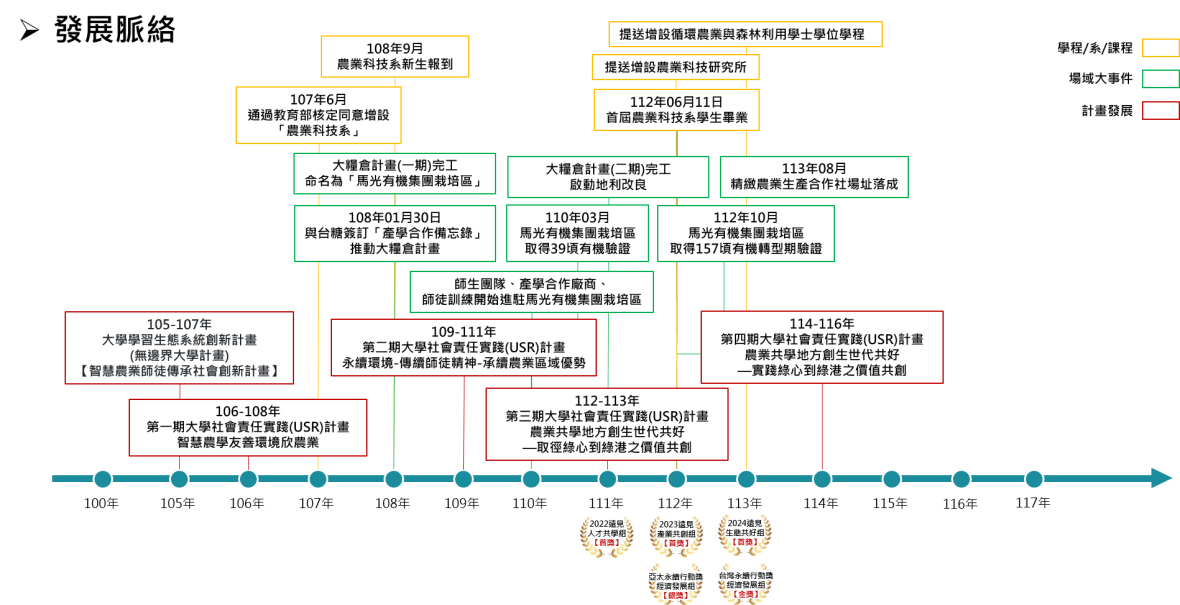
Phase I (2017–2019) – Smart Agricultural Science, Environmentally Friendly New Agriculture
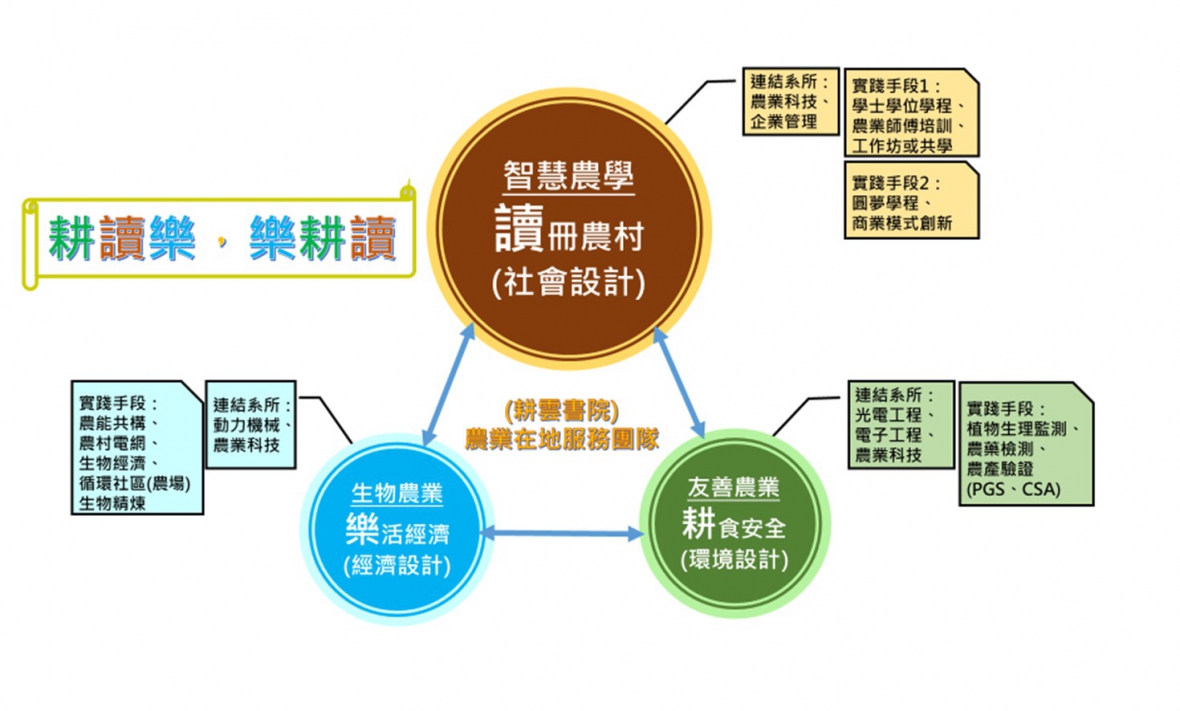
“Smart Agricultural Science, Environmentally Friendly New Agriculture” focuses on agricultural education in Yunlin by introducing an agricultural apprenticeship dual-track training model. The practical directions include rural learning, safe food production, and LOHAS economy.
Based on these core ideas, the vision slogan “Joy in Farming and Learning, Learning through Farming” was formed to establish consensus and unify the focus of participants.
Phase II (2020–2022) Sustainable Environment - Continuing the Apprenticeship Spirit - Extending Regional Agricultural Advantages
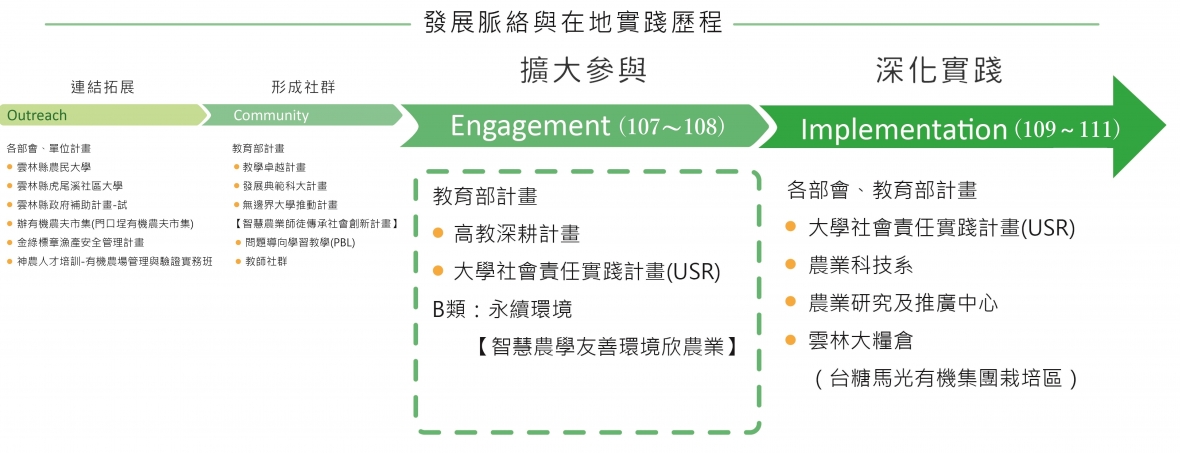
“Sustainable Environment – Continuing the Apprenticeship Spirit – Extending Regional Agricultural Advantages” begins with the cultivation of agricultural talents in the Department of Agricultural Technology at this university. Combined with the research and teaching strengths of an interdisciplinary faculty team and the agricultural expertise of master farmers and industry mentors, the program passes down practical agricultural operation techniques. Students also conduct internships in the Yunlin Granary area and in the experimental greenhouses at the university’s new campus agricultural experimental farm. The Agricultural Research and Extension Center team actively promotes local engagement, encouraging local youth to participate in agricultural production and improving agricultural product quality to increase local employment opportunities. Based on Yunlin’s rural culture, the university considers how to contribute to regional development through its geographic and educational characteristics, while maintaining close cooperation with local communities. Therefore, the execution goal of this phase is to achieve sustainable environmental development and symbiotic coexistence with local communities.
Phase III (2023–2024) Agricultural Co-Learning and Local Revitalization for Intergenerational Prosperity — Creating Shared Value from Green Heart to Green Port
The key focus of the second-phase University Social Responsibility program implemented by this team was the establishment of the Department of Agricultural Technology, starting with the cultivation of local agricultural talents. Through the dual-track apprenticeship system, students are guided into the agricultural field.
The third-phase project continues the “lifelong companionship for agricultural learners” mechanism established previously. It focuses on employment skills and entrepreneurial guidance provided by the Agricultural Research and Extension Center for students before graduation (including evening program students, day program students, and Farmers’ University participants), as well as their agricultural career development after graduation.
An interdisciplinary faculty team has been organized to establish an Agricultural Upgrading Technical Advisory Group, bringing the university’s knowledge, research, and professional expertise into real agricultural environments. This group serves as a local agricultural innovation incubation and think tank team, completing the final piece of the puzzle for cultivating agricultural talents in Yunlin.
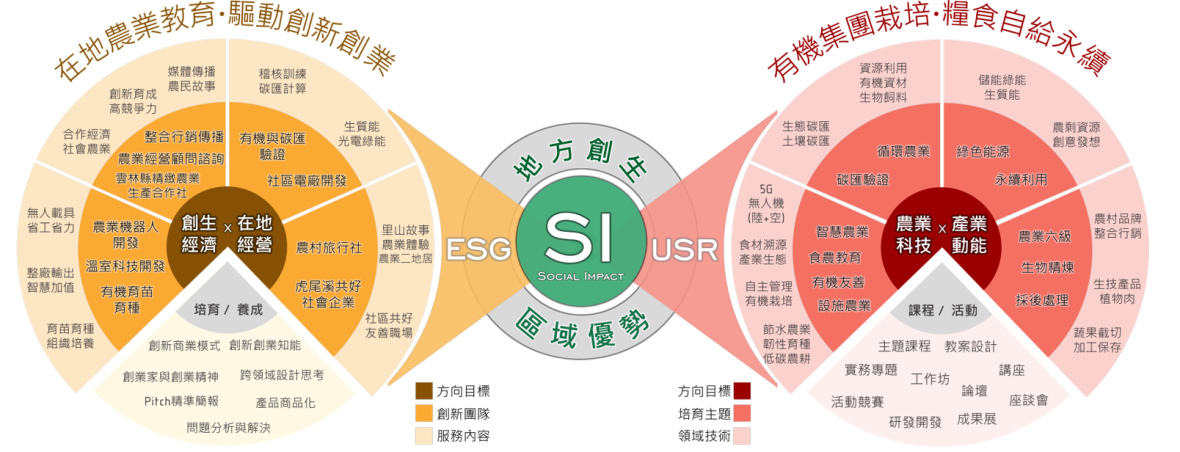
Phase IV (2025–2027) Agricultural Co-Learning and Local Revitalization for Intergenerational Prosperity — Implementing Shared Value Creation from Green Heart to Green Port
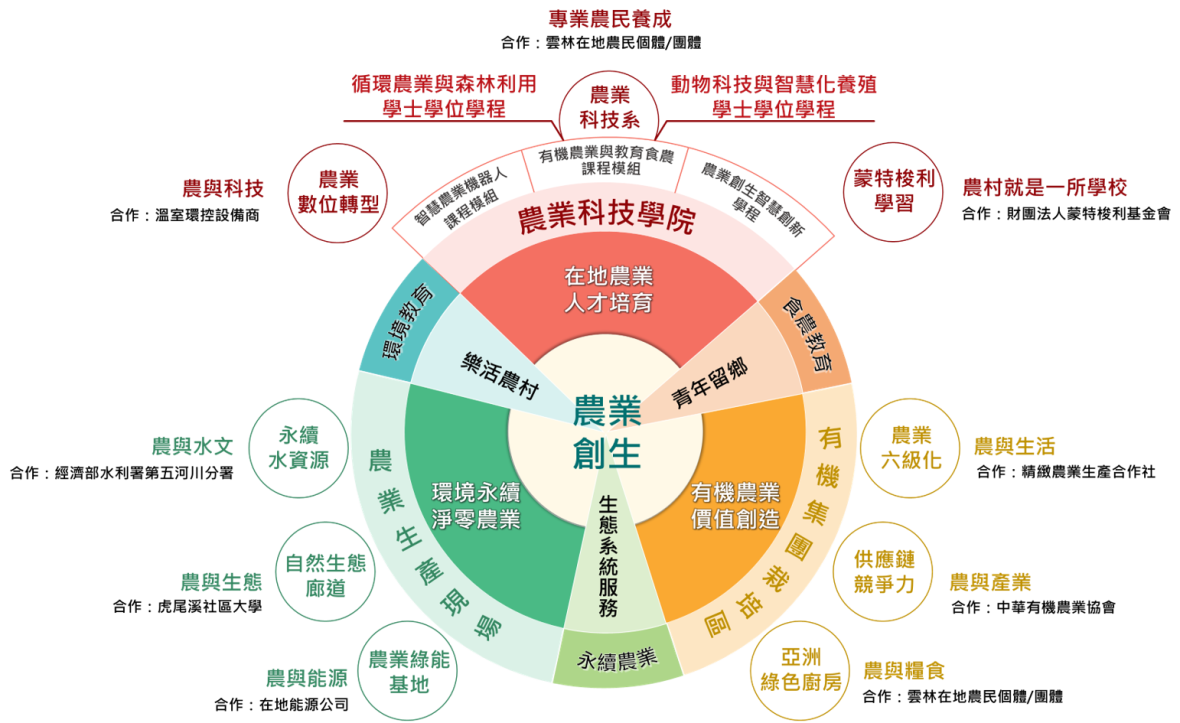
This team continues the “Agricultural Revitalization” framework established in the third-phase project. It continues to cultivate professional skills for students of the Department of Agricultural Technology before graduation and provide innovation and entrepreneurship guidance after graduation. Through faculty communities, an interdisciplinary team has formed an Agricultural Upgrading Technical Advisory Group to introduce the university’s knowledge, research, and professional expertise into agricultural practice. The core project area remains the “Huwei Maguang Organic Group Cultivation Area,” expanding outward from this center to promote the application and development of smart agriculture, increase the cultivation area of organic and environmentally friendly agriculture, establish ecological demonstration sites, and cultivate professional agricultural talents. Therefore, the new phase of the project continues to develop along three main directions: “Agricultural Technology and Local Talent,” “Organic Agriculture and Value Creation,” and “Environmental Sustainability and Net-Zero Agriculture.” Under “Agricultural Technology and Local Talent,” preparations for establishing the College of Agricultural Technology have been completed. Applications for the Bachelor’s Program in Circular Agriculture and Forest Utilization have been submitted. The Agricultural Revitalization and Smart Innovation Program has also been approved and will begin implementation in the 2024 academic year. The new phase will focus on promoting and developing this program and aims to complete the establishment of the College of Agriculture and the bachelor’s program within three years. Under “Organic Agriculture and Value Creation,” 197 hectares of farmland have obtained organic or organic transition certification. Farmers have been assisted in establishing a cold-chain center and developing grain-processing agricultural products. In addition, a comprehensive training system for organic agricultural product auditors has been established, and 40 qualified auditors were trained in 2024. The new phase will focus on cultivating more qualified agricultural product auditors and increasing public awareness and acceptance of organic agricultural products to enhance the overall development of organic agriculture. Under “Environmental Sustainability and Net-Zero Agriculture,” soil survey data and ecological investigations across the entire area have been completed. In 2024, the project received the First Prize of the Ecological Sustainability Award from Global Views Monthly. The new phase will focus on establishing long-term soil monitoring data and providing reasonable fertilization recommendations for farmers. Ecological and environmental initiatives will introduce various eco-friendly measures to continuously develop an agriculture park that is friendly to the ecosystem.